Bonsai Juniperus chinensis
- per sapere le spese di consegna
- Riceverai 10.5 bonus
La pianta è già stata trapiantata. Non è necessario ripiantare dopo l'acquisto
Frequenza di irrigazione
1 volte per settimana
Dimensione
- Larghezza - 17 cm
- Altezza - 35 cm
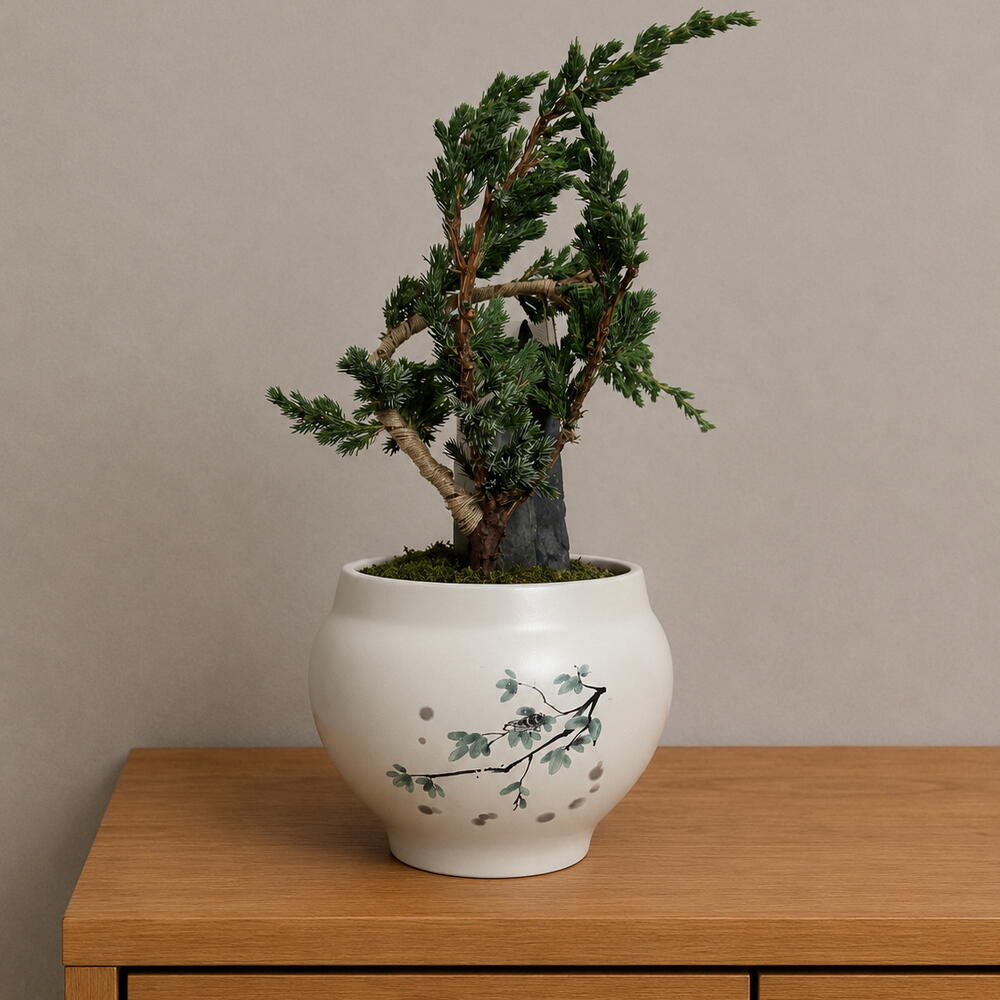
Bonsai Juniperus chinensis Juniperus chinensis Bonsai, also known as Chinese Juniper Bonsai, is an elegant evergreen tree with dense, textured foliage and beautifully shaped branches. Its naturally sculptural appearance makes it one of the most popular plants for traditional bonsai cultivation. The Chinese Juniper grows slowly and responds well to pruning and shaping. With proper care, it can maintain its decorative form for many years and develop an increasingly mature and distinctive appearance.
Guida alla cura
Care Light: Place the bonsai in a very bright location with plenty of natural light. Direct sunlight for several hours a day is beneficial. Chinese Juniper is best grown outdoors rather than as a permanent indoor plant. Watering: Water thoroughly when the top layer of soil begins to dry. Keep the substrate slightly moist but never waterlogged. Do not allow the root ball to dry out completely. Temperature: Juniperus chinensis prefers fresh air and seasonal temperature changes. It is a hardy outdoor bonsai and benefits from a cool winter dormancy period. Humidity: Normal outdoor humidity is usually sufficient. During hot and dry weather, the foliage can be lightly misted. Soil: Use a loose, well-draining bonsai substrate that allows good airflow around the roots and prevents excess moisture. Fertilizing: Feed with a balanced bonsai fertilizer during the active growing season, usually from spring to early autumn. Reduce or stop feeding during winter dormancy. Pruning: Regular pruning helps maintain the desired shape and encourages dense growth. Remove unwanted shoots carefully and avoid excessive pruning at one time. Repotting: Young bonsai can be repotted every 2–3 years, while mature specimens require repotting less frequently. Spring is generally the best time for repotting. Important: Juniperus chinensis is primarily an outdoor bonsai. Keeping it permanently indoors, especially in warm and poorly lit conditions, can weaken the plant.
Bonsai Juniperus chinensis Juniperus chinensis Bonsai, also known as Chinese Juniper Bonsai, is an elegant evergreen tree with dense, textured foliage and beautifully shaped branches. Its naturally sculptural appearance makes it one of the most popular plants for traditional bonsai cultivation. The Chinese Juniper grows slowly and responds well to pruning and shaping. With proper care, it can maintain its decorative form for many years and develop an increasingly mature and distinctive appearance.
Guida alla cura
Care Light: Place the bonsai in a very bright location with plenty of natural light. Direct sunlight for several hours a day is beneficial. Chinese Juniper is best grown outdoors rather than as a permanent indoor plant. Watering: Water thoroughly when the top layer of soil begins to dry. Keep the substrate slightly moist but never waterlogged. Do not allow the root ball to dry out completely. Temperature: Juniperus chinensis prefers fresh air and seasonal temperature changes. It is a hardy outdoor bonsai and benefits from a cool winter dormancy period. Humidity: Normal outdoor humidity is usually sufficient. During hot and dry weather, the foliage can be lightly misted. Soil: Use a loose, well-draining bonsai substrate that allows good airflow around the roots and prevents excess moisture. Fertilizing: Feed with a balanced bonsai fertilizer during the active growing season, usually from spring to early autumn. Reduce or stop feeding during winter dormancy. Pruning: Regular pruning helps maintain the desired shape and encourages dense growth. Remove unwanted shoots carefully and avoid excessive pruning at one time. Repotting: Young bonsai can be repotted every 2–3 years, while mature specimens require repotting less frequently. Spring is generally the best time for repotting. Important: Juniperus chinensis is primarily an outdoor bonsai. Keeping it permanently indoors, especially in warm and poorly lit conditions, can weaken the plant.
Parte del testo presente nella pagina è stata tradotta automaticamente.
Valutazioni e recensioni
Mittente
Giugno 2026
Отличный магазин, сервис на уровне, внимательный и заботливый!
Tradurre in Italiano
Mittente
Maggio 2026
Mittente
Maggio 2026
Mittente
Aprile 2026
Mittente
Aprile 2026
199 valutazioni • 103 acquisti
Segnalare articolo
Altri articoli di questo negozio